• All
  • Hormones & Physiology
  • Nutrition
  • Supplements
  • Training

Satellite Cells and Muscle Growth

Satellite Cell Activation: A Necessary Muscle Growth Component… How You Can Stimulate Yours for Maximum Muscle Gains! The regenerative, healing ...


Read More

Taurine

Taurine is one of the best amino acids to help improve muscle soreness because it helps to push glutamate conversion ...

Read More

Genetic Factors Involved in Building Muscle: Myostatin

We’ve all been there. You’re in the gym busting your ass everyday, your diet is on point and you’re making ...

Read More

Omega-3 Fish Oils: The Basics You Need to Know

Omega-3s are one of the fats that actually have gotten a lot of good press.  In this case it’s actually ...

Read More

Resistant Starch, part 2 of 3 – Where can I find it?

What foods have resistant starch? There are 4 types of RS (resistant starch). Unlike most other ingredients, resistant starches are ...

Read More

Eating for Supercompensation – Ideal Post-MI40-X

So you’ve dieted hard, and trained even harder. Your mind and your body have been battered and depleted from the ...
Read More
Showing Slide 1 of 7
  See More

Side-Delt Movements


General guidelines for all Side-Delt Raises
(unless specifically stated otherwise)

  • bring feet together
  • ‘shove’ shoulders / hands down before beginning the movement each rep
  • hold dumbbells only with the delts (consciously try to relax the biceps, triceps, forearms and traps)
  • the side delts should remain on top throughout (palms down, perpendicular to ground); slightly internally rotate shoulders at the top (though wrists should remain straight)
  • avoid ‘shrugging’ the weights up – keep them as far away as possible while maintaining a very slight and consistent rigid bend in the elbows (relax traps, especially at the bottom)
  • from the bottom, initiate through the elbows (as opposed to the hands) – think about ‘dragging’ the weights parallel to the ground for as long as possible before then reaching for the side walls for the reminder of the movement
  • only come up only until the arms are perpendicular to the torso at the top, no higher.


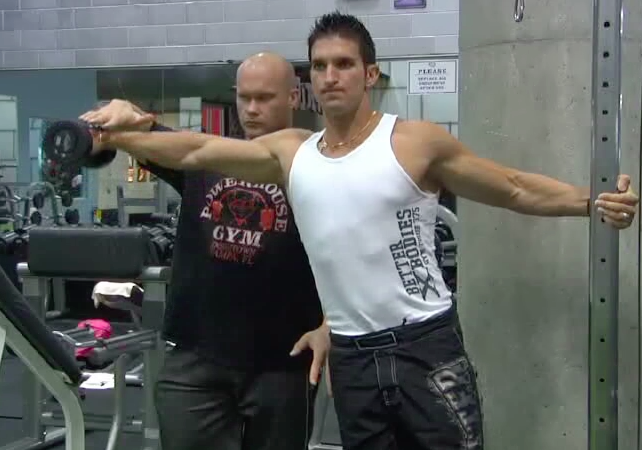
Dumbbell Lateral Raises

    Exercise Specific:

  • start / end about 30º from the body (just short of where tension is removed from the delts)
  • as an advanced technique / intensifier, the movement may also be performed with fully locked-out elbows – squeeze the triceps hard throughout and be sure to perform with minimal weight and very strict form.


Locked-Out Lateral Raises

    Exercise Specific:

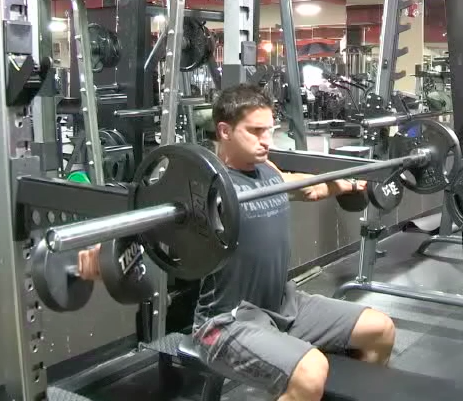
  • ideally, sit in a power / squat rack with the rack set to about shoulder-height when seated – the aim is to enable you the ability to ‘shove’ up into them hard at the top
  • set a barbell in the racks to keep them weighted in place.


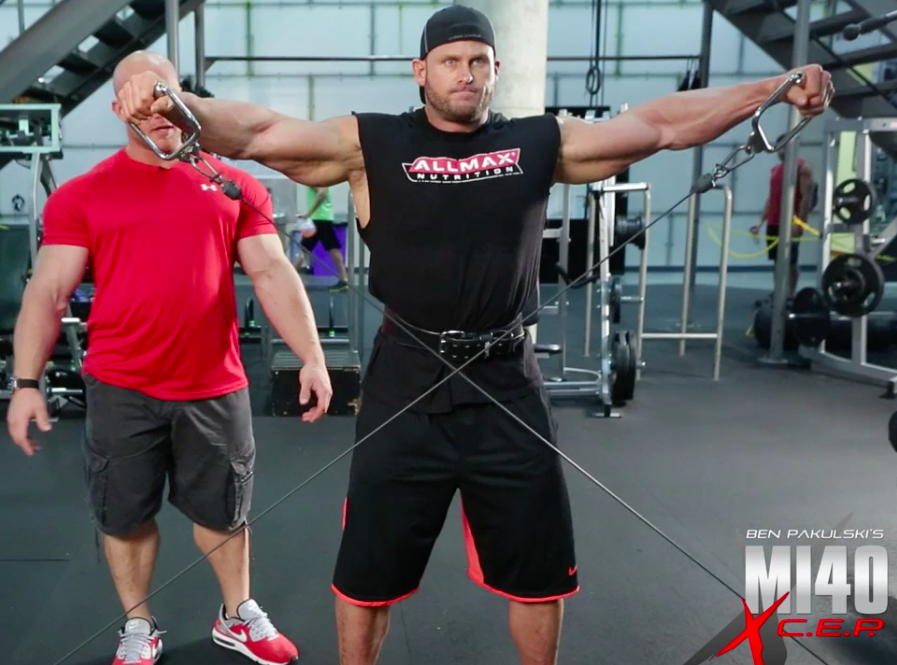
Cable Lateral Raises

    Exercise Specific:

  • can also be performed seated (assists in removing extraneous movement)
  • come across the body at the bottom as far as a rigid arm will allow
  • if using the minimum cable weight but still struggling / unable to hit goal reps, use a ‘rest /pause’ approach, e.g; perform as many reps as you can straight through, immediately take 10 seconds rest, then carry on – repeat until you achieve target reps.


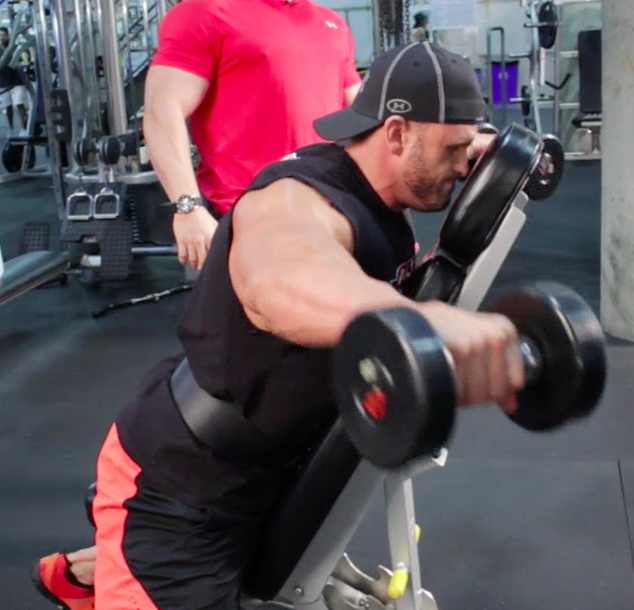
Incline Prone Lateral Raises

    Exercise Specific:

  • high incline, approximately 75º
  • push chest into pad and keep torso tall throughout.


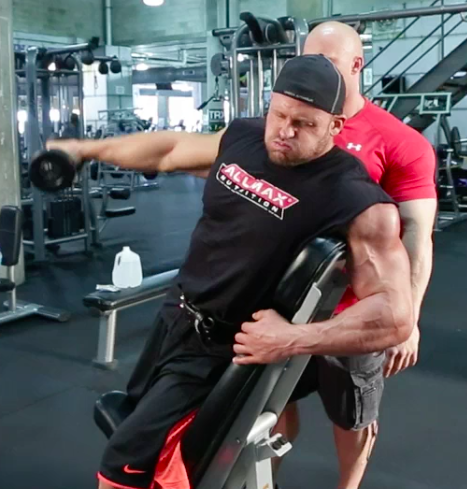
Side-Leaning One-Arm Lateral Raises

Extended at the top

    Exercise Specific:

  • keep the supporting-arm straight / relaxed – just hang from it, don’t allow it to assist during the movement
  • start / end about 6” from the body (just short of where tension is removed from the delts)
  • pay close attention to keeping the shoulders and hips square
  • begin with a deep / exaggerated lean
  • to extend the set if necessary to achieve goal reps, the angle of the lean can be reduced as the set progresses.


Supported Side-Lying One-Arm Lateral Raises

    Exercise Specific:

  • set bench at a relatively high incline (75º or so).


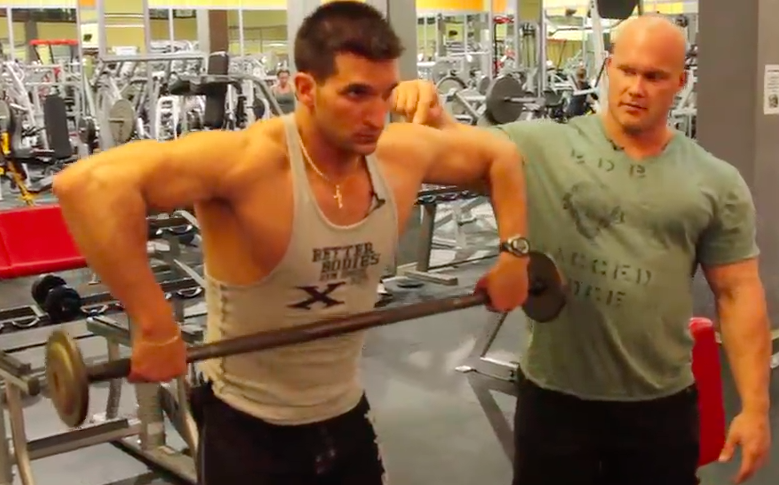
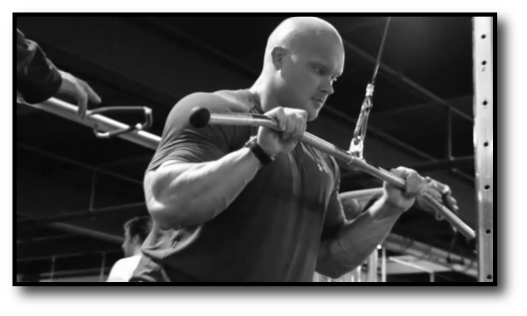
Upright Rows

    Exercise Specific:

  • contrary to how you usually see an upright row performed, take a ‘wide-grip’ on the bar instead (forearms should ideally be perpendicular to the ground); among other things, holding it narrow places unnecessary stress on the wrists
  • stand tall and aim to bring elbows up as high as possible (aim to the ceiling, despite in reality you won’t get particularly high, perhaps to nipple line)
  • keep the wrists as neutral / straight as possible throughout
  • a ‘little’ body movement is okay with this exercise, just so long as the forearms stay perpendicular to the ground.


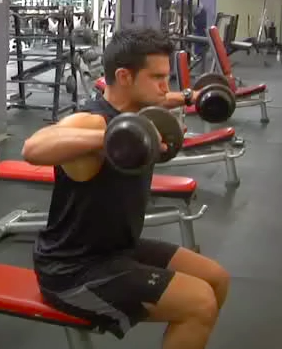
Poliquin Raises

Elbows up after hammer curl portion
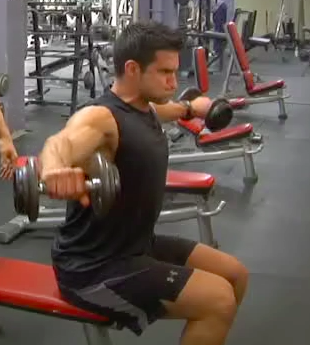
Extend arms out to the sides and then lower

    Exercise Specific:

  • begin with arms down by sides, triceps contracted and palms facing inwards
  • step 1: while keeping elbows back, ‘hammer curl’ the dumbbells up to 90º by contracting the biceps
  • step 2: keep the bend in the elbows static, but pull elbows out to the sides until they are parallel to the ground (palms facing the floor at the top)
  • step 3: extend the dumbbells out to the sides until the triceps are fully contracted (fully stretched position)
  • step 4: lower the weight under control, resisting the negative throughout.